More than a mural: Fort Nelson artists share stories of healing, culture, and connection
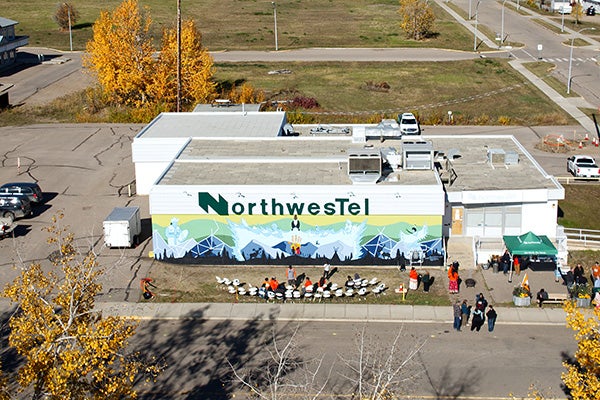
On a wall along the Alaska Highway in Fort Nelson, a new mural tells a story that goes far beyond its colours and brushstrokes.
The artwork, painted on Northwestel’s Central Office, brings together Indigenous culture, community, and the shared journey toward truth and reconciliation. But behind the finished piece is another story – one of young artists stepping outside their comfort zones, and a community coming together to create something meaningful.
On Sept. 30, more than 100 people gathered to celebrate the mural’s unveiling on National Day for Truth and Reconciliation. For the artists and community members involved, the ceremony was an opportunity to reflect on the stories represented in the artwork and the importance of ensuring Indigenous voices are seen, heard, and remembered.
Bringing the mural to life
The mural was created through a partnership between Northwestel and the Northern Rockies Arts Council as part of Healing Through Art: Indigenous Voices on Truth and Reconciliation.
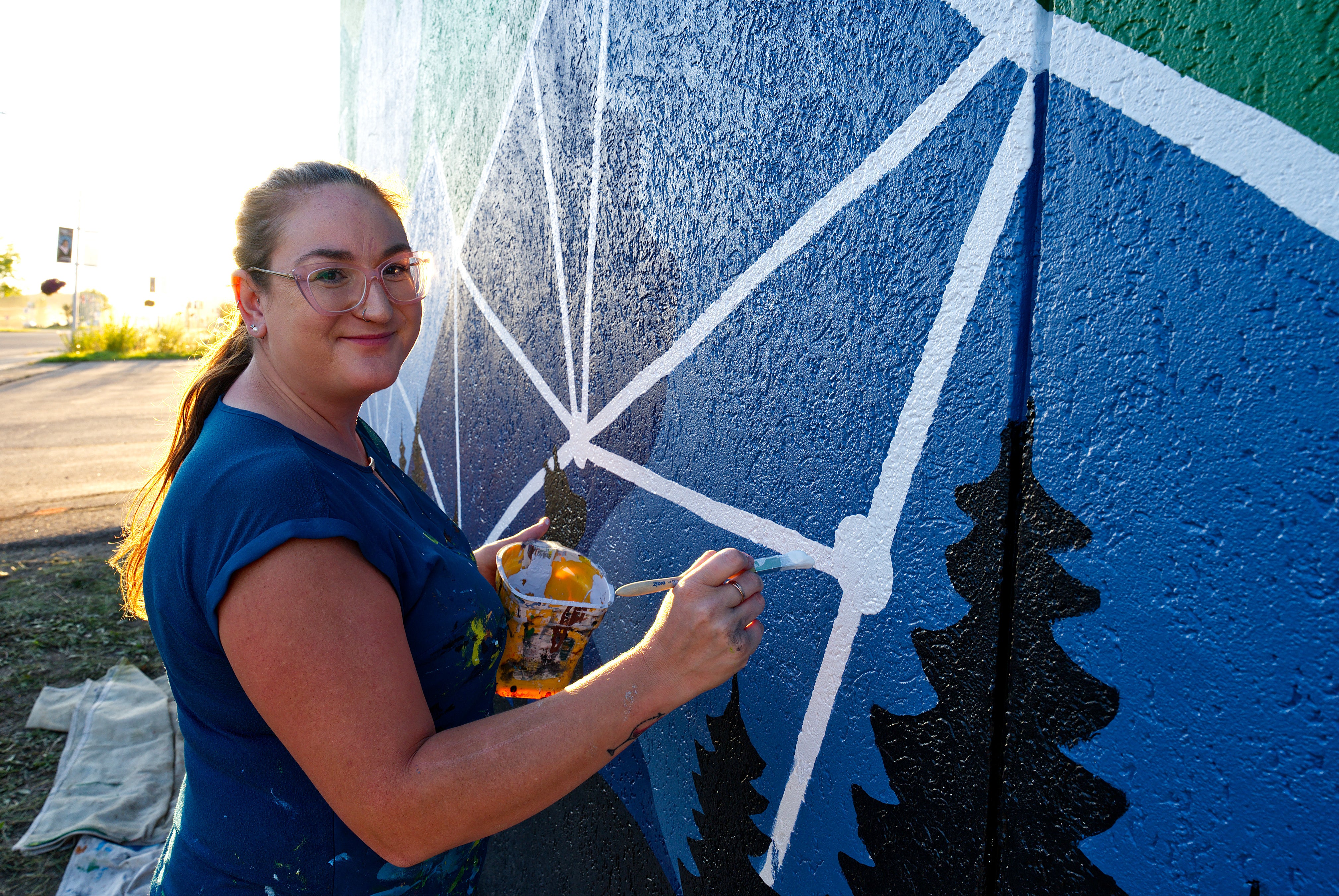
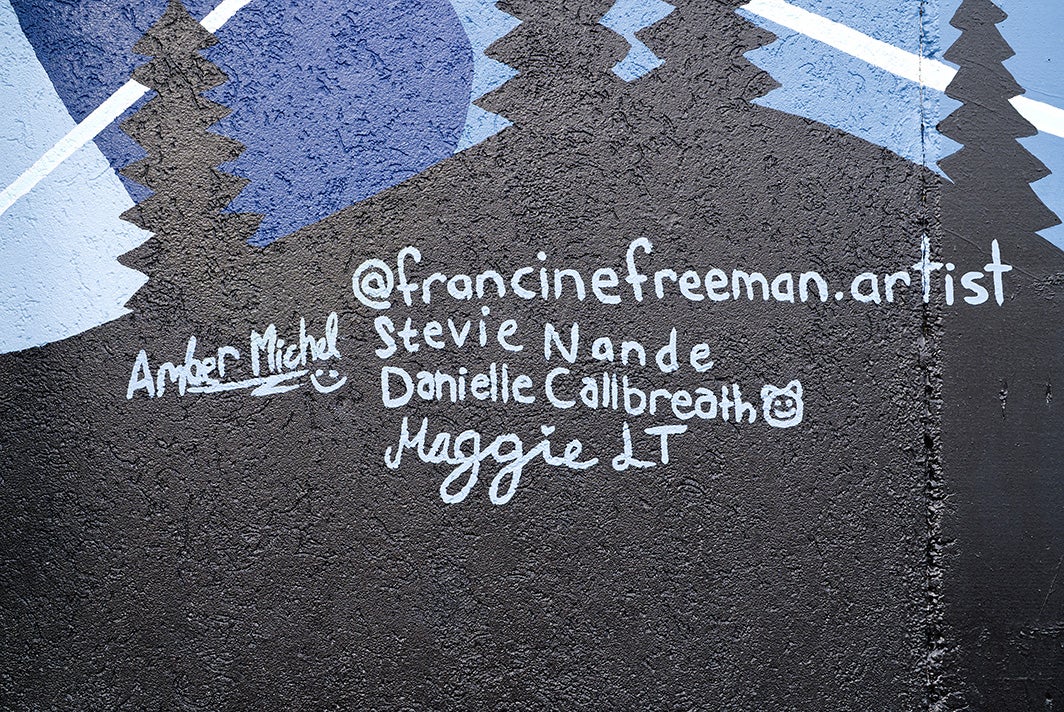
Led by Fort Nelson artist and educator Francine Freeman, Northern Rockies Arts Council Executive Director, the project brought together four Indigenous artists: Amber Michel, Danielle Callbreath, Maggie Lamouche-Twin, and Stevie Nande.
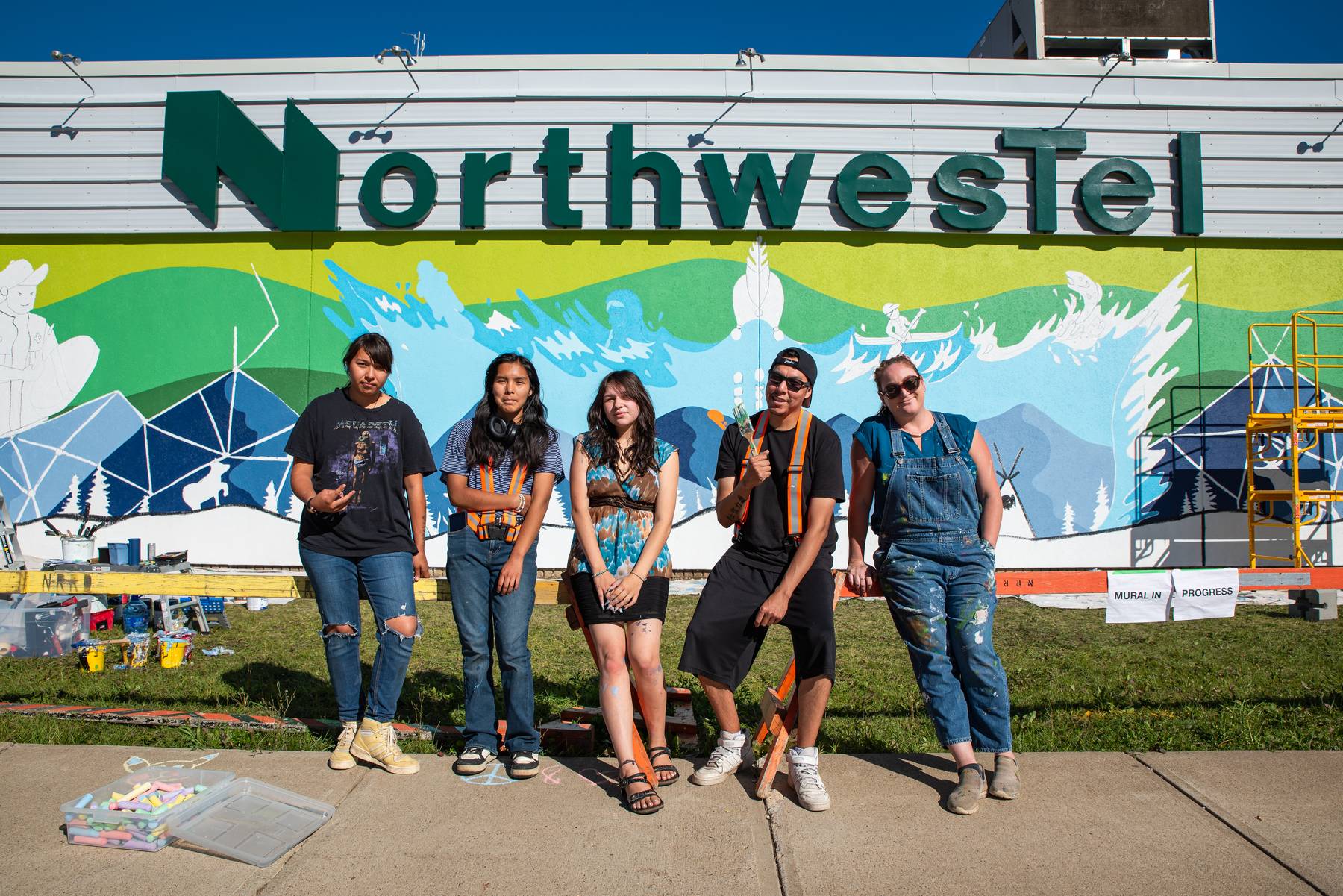
Each artist brought their own experiences, cultural connections, and creative perspectives to the project. Together, they transformed the side of Northwestel’s building into a large-scale artwork celebrating the people, history, and landscape of Fort Nelson, with themes of reconciliation, connection, healing, resilience, and moving forward together.
The process was not without its challenges.
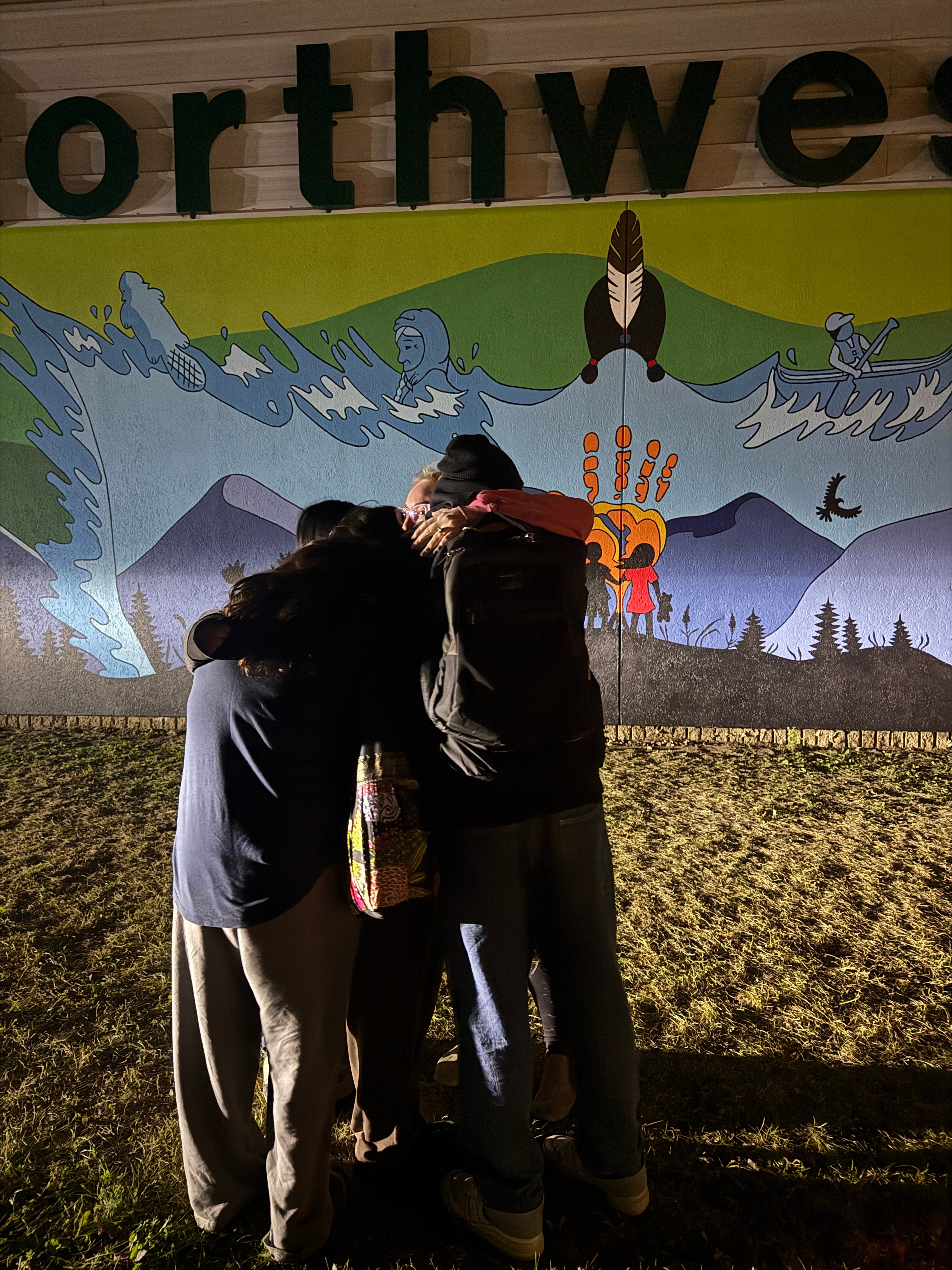
Some days, the artists spent up to 12 hours painting, working through changing northern weather. They painted on weekdays, weekends, and after school, even working in the dark to complete the mural’s outline with a projector.
But as the artwork took shape, so did the relationships between the artists.
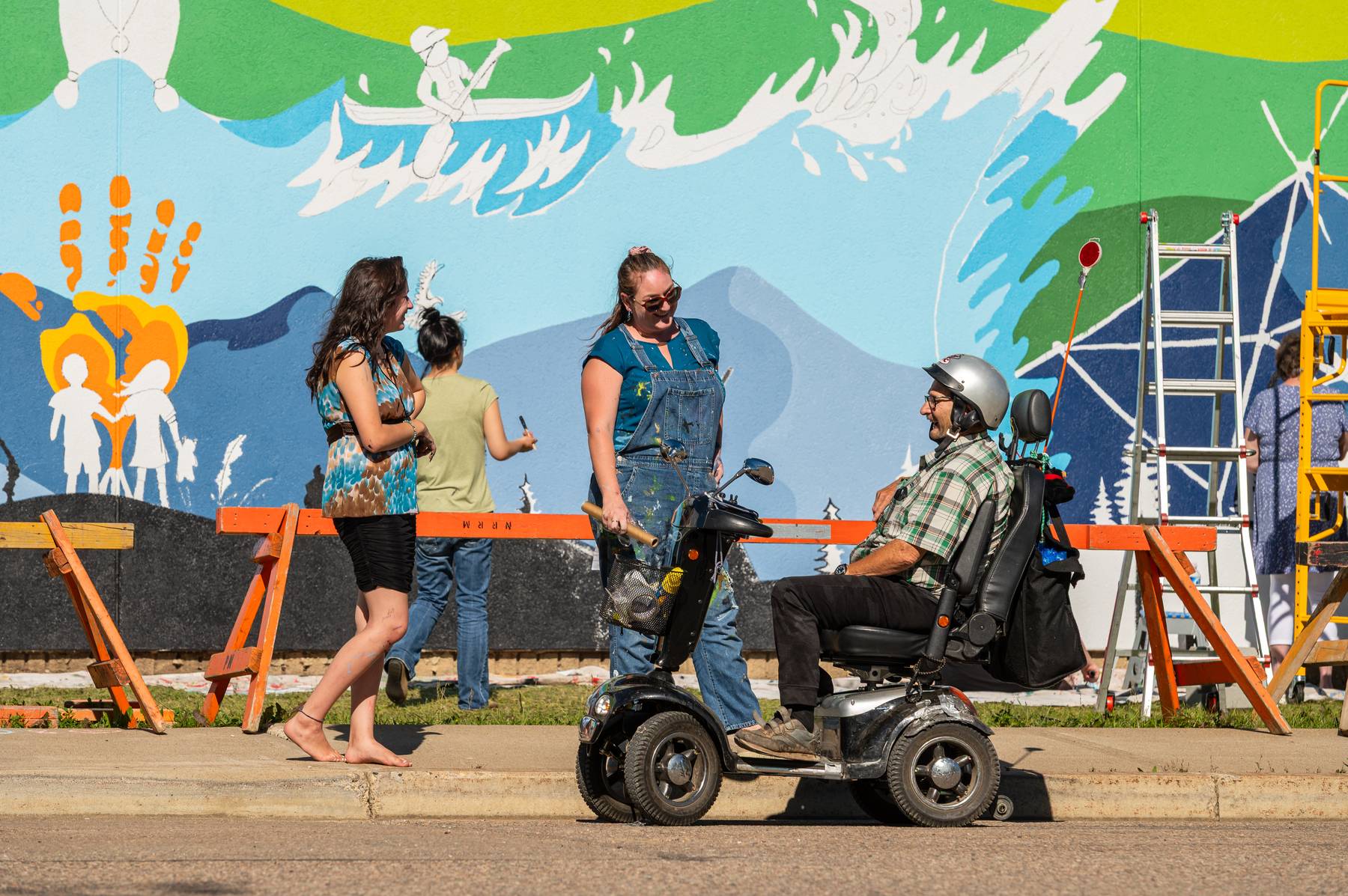
Throughout the process, community members stopped by with snacks, pizza, and drinks, offering encouragement and support as the group worked.
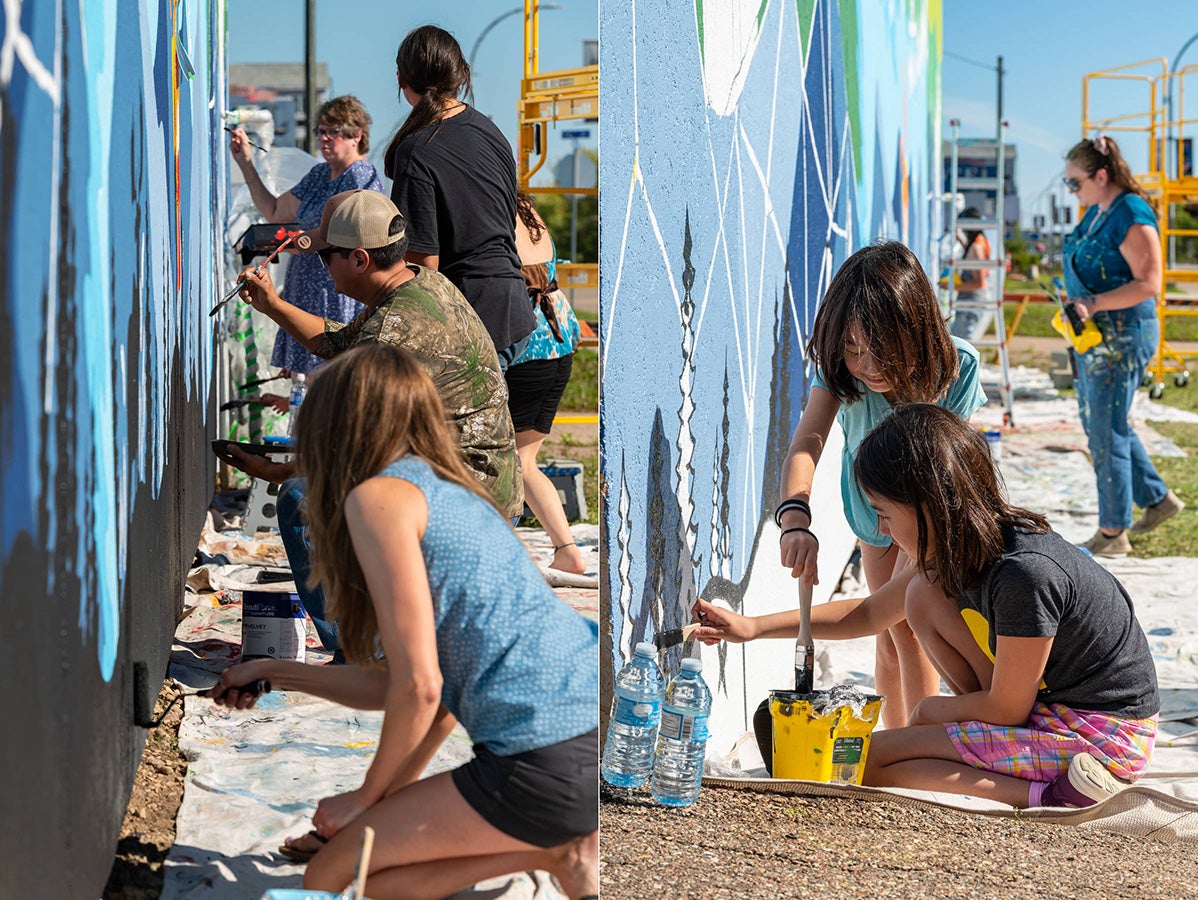
The artists also invited residents to take part in a ‘Come Paint with Us’ community painting day, where people of all artistic abilities could add their own brushstrokes to the mural. The event brought together community members to meet the artists, contribute to the artwork, and take part in a project celebrating Fort Nelson’s people, culture, and spirit.
For Francine, that community involvement reflected something much bigger about Fort Nelson.
“What makes Fort Nelson unique is that it’s built on community, and that’s exactly what we’ve shown here,” she shared during the unveiling ceremony.
Francine, who also teaches art at Chalo School, an independent First Nations school in Fort Nelson, had the opportunity to work alongside two of her students, Amber and Maggie. Watching them grow as artists and take on such a large project was especially meaningful.
The experience also offered the young artists an opportunity to build confidence and contribute to their community.
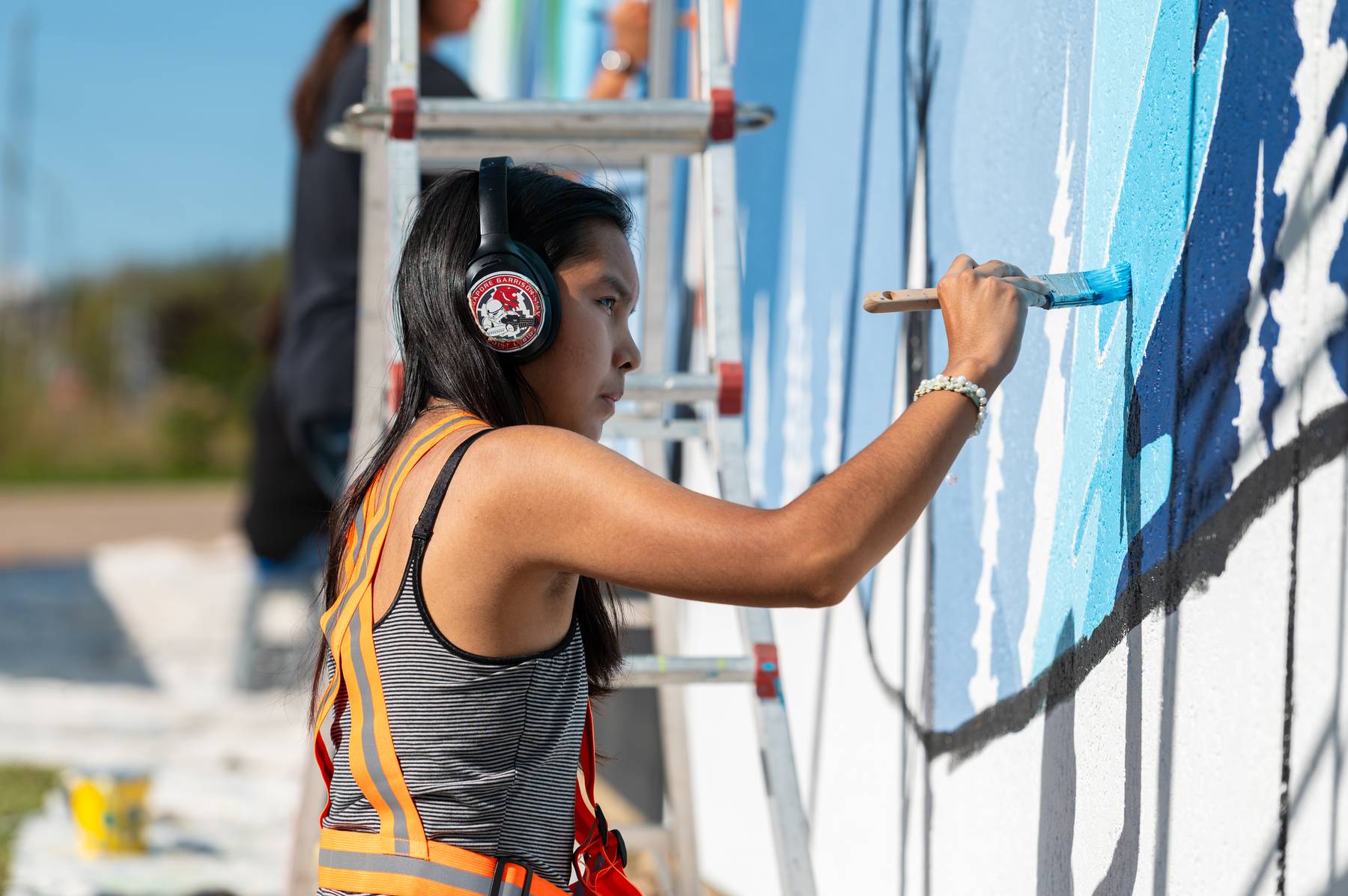
During the ceremony, Amber reflected on how participating in the project helped her feel less alone and encouraged her to step outside her comfort zone.
“There’s nothing cooler, in my opinion, than being paid for going out of my comfort zone,” she shared.
For Amber, the experience was about more than the opportunity to create art. It was a chance to give back to her community, build relationships, and encourage other young people to pursue similar opportunities.
When the artists completed the mural on Sept. 15, they marked the occasion with a group hug and a moment of reflection. Each artist placed tobacco beneath the fire depicted in the mural, bringing their shared experience to a meaningful close.
Every brushstroke tells a story
While the mural is striking from a distance, its deeper meaning becomes clearer when looking closely at the individual elements.
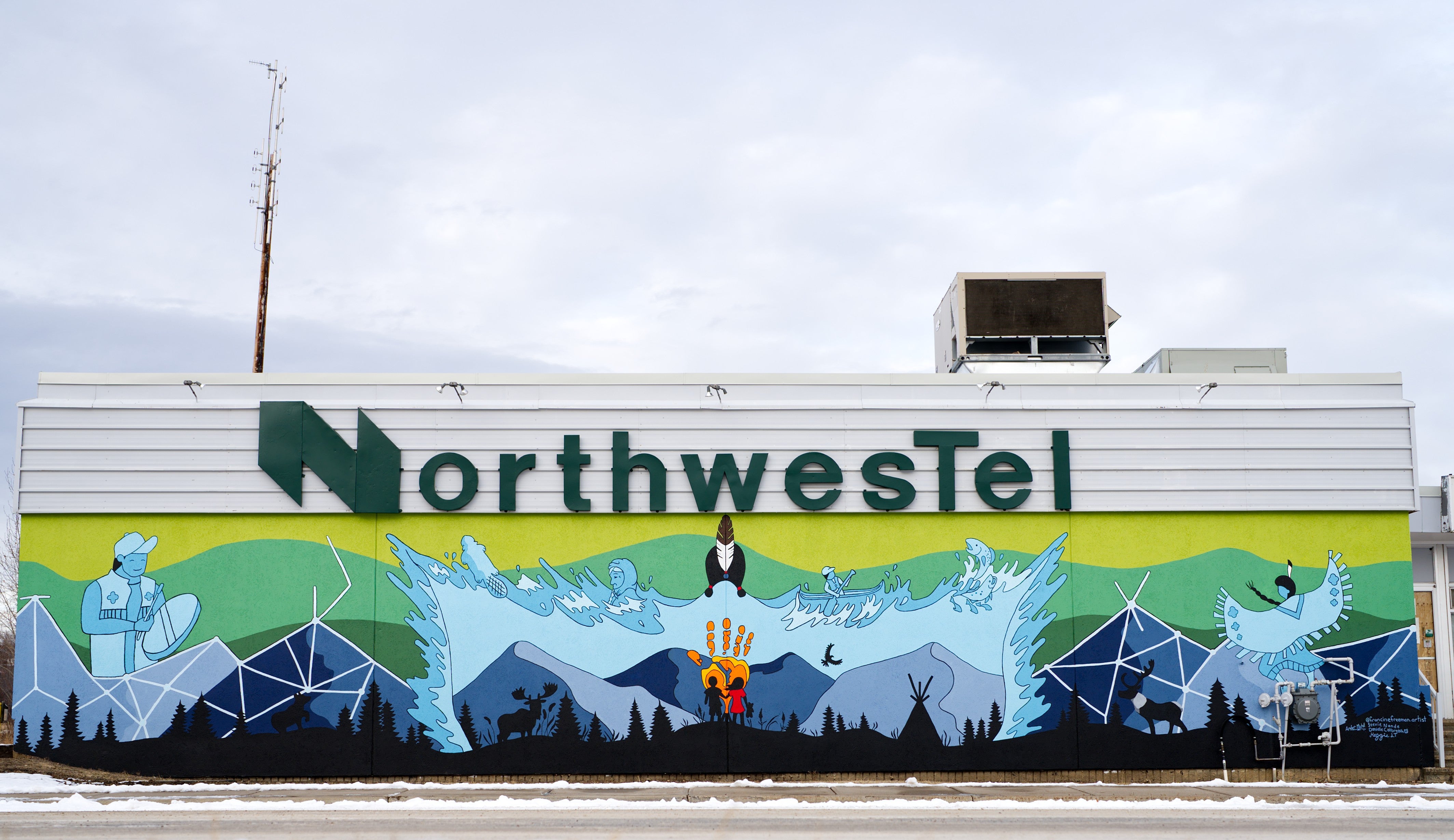
At the centre of the artwork is a Fancy Shawl Dancer, whose flowing shawl represents the wings of a butterfly. The image symbolizes transformation, freedom, and the possibility of new beginnings.
Nearby, a Dene drummer represents the heartbeat of the Earth and the connection between the physical and spiritual worlds. Elders symbolize wisdom, leadership, and the importance of passing knowledge between generations.
Two children holding hands around a fire represent unity and the process of healing together. Orange and red imagery honours Every Child Matters and raises awareness of Missing and Murdered Indigenous Women, Girls, and Two-Spirit people.
The surrounding landscape also carries meaning. Mountains, wildlife, waterways, and fireweed reflect the natural beauty of Fort Nelson and the relationship between people and the land. The beaver symbolizes hard work and adaptability, while the canoe represents teamwork and the importance of navigating challenges together.
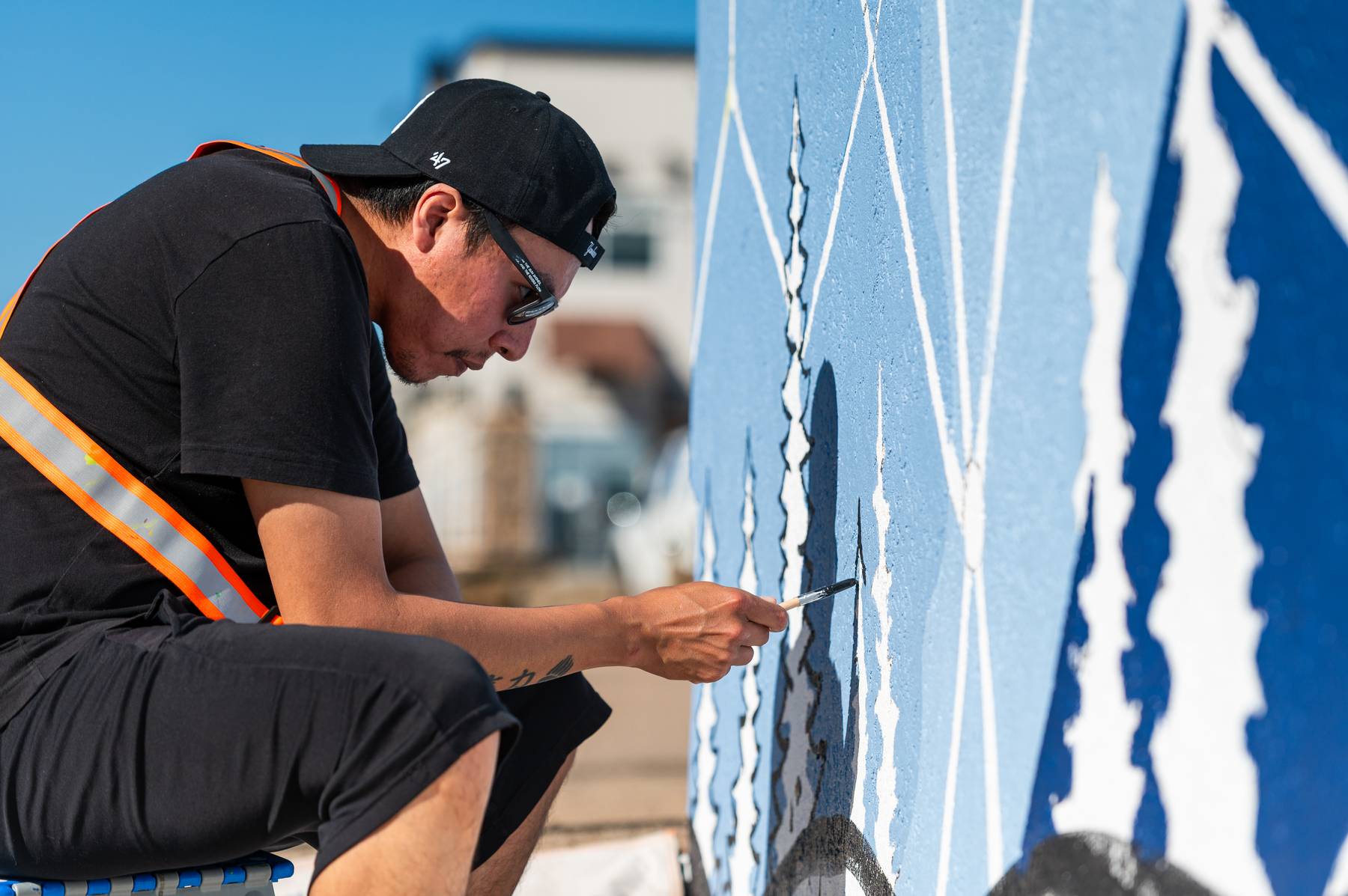
During the ceremony, artist Stevie Nande explained that the canoe reflects the way communities must support one another through difficult times.
Just as a canoe requires people to work together to navigate rough waters, he shared, the community must come together to move toward a better future.
For Stevie, the mural is more than a collection of symbols. It is an invitation for people to reflect on their own experiences and find meaning in the artwork.
“When one of us hurts, we all hurt, so know that we’re walking right beside you and your path of healing,” he told those gathered at the unveiling.
His hope is that visitors will connect with at least one part of the mural and carry its message with them.
A ceremony of reflection and remembrance
The mural’s unveiling on the National Day for Truth and Reconciliation gave the community an opportunity to gather, reflect, and honour the stories represented in the artwork.
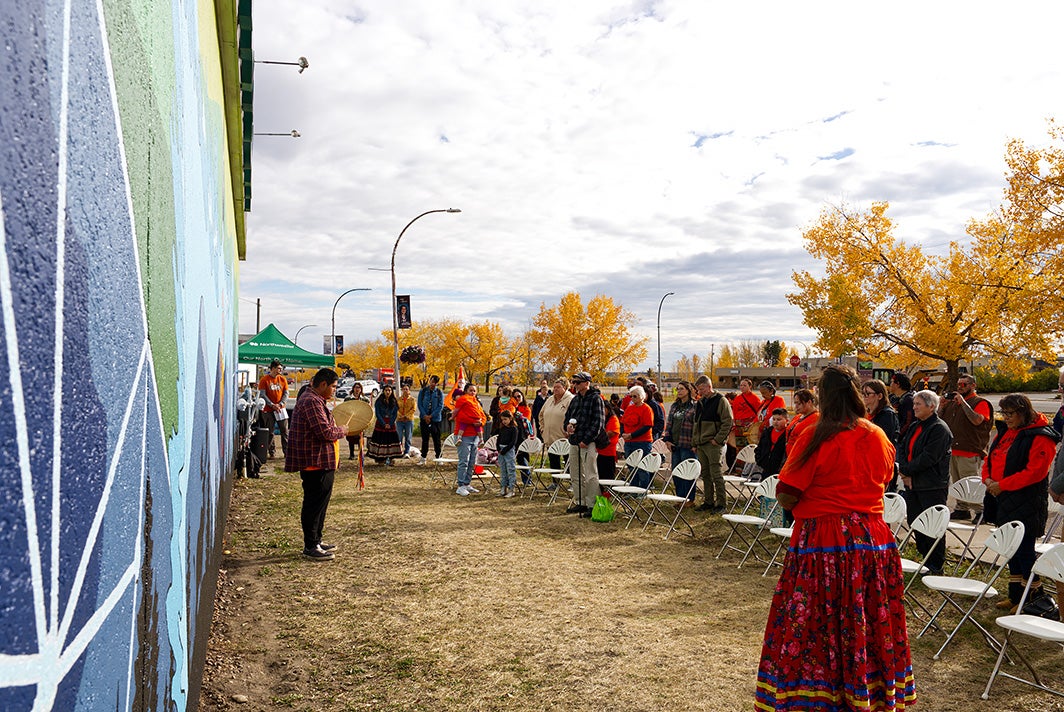
The ceremony opened with traditional drumming and a prayer by Jeffrey Jr. Salopree, followed by remarks from the artists, Indigenous community members, and Northwestel representatives.
Francine Freeman reflected on the dedication of the artists and the relationships they built throughout the project, while Stevie Nande shared the cultural meanings behind the mural’s imagery. Amber Michel also spoke about her experience as a young artist and the importance of creating opportunities for youth to express themselves through art.
The ceremony also featured remarks from Kathi Dickie, a member of Fort Nelson First Nation, who spoke about Indigenous history and the importance of acknowledging the truth about residential schools.
Elder Theresa Sutherland, a cultural knowledge holder, emphasized that the mural represents much more than the beautification of a building. It creates a visible space for First Nations histories, experiences, and perspectives in a place where residents and travellers can encounter them daily.
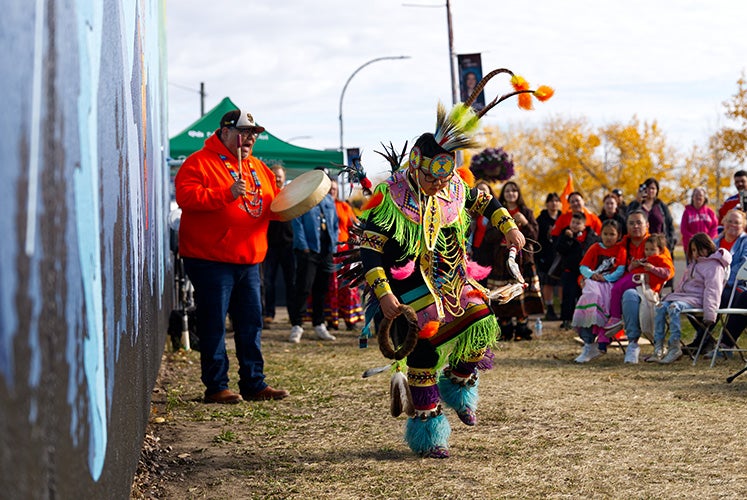
The gathering also included remarks from Devin Bellerose, a First Nations Cultural Arts Specialist, followed by a Chicken Dance performed by his son Wapiti Bellerose. The Muskwa River Hand Drummers led a round dance and closing prayer, bringing the community together through cultural traditions.
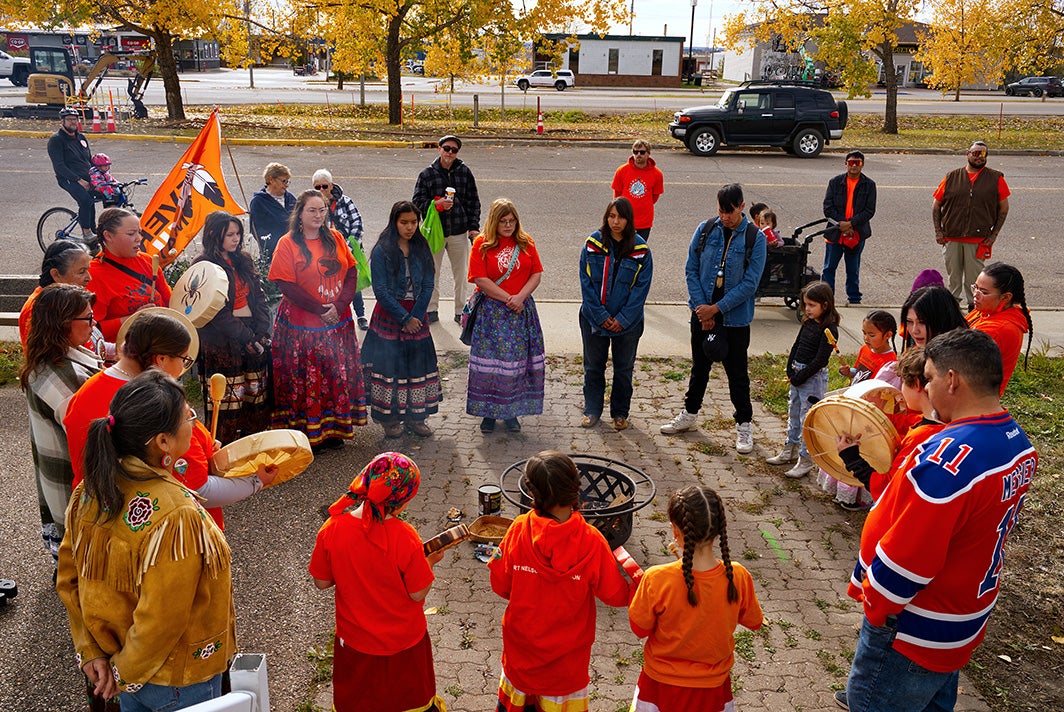
Beyond the ceremony, the afternoon was also an opportunity for community members to connect over food and conversation. Casey Gardner, a Fort Nelson First Nation citizen, prepared stew and bannock for those attending, while Northwestel provided cupcakes, giveaways, and orange shirts featuring artwork by Yukon Tlingit artist Guná Jensen. Her design, depicting a small figure held safely in two protective hands, reflects themes of care and protection.
These moments of gathering and sharing reflected the same spirit of community that helped bring the mural to life.
For those involved, the unveiling was not simply a celebration of completed artwork. It was a recognition of the relationships, cultural knowledge, and shared efforts that made the project possible.
A connection beyond the wall
One of the mural’s distinctive features is a series of bright lines extending across the mountains, representing Northwestel’s fibre-to-the-home network and the ways technology connects people across distances.
The imagery brings together two forms of connection – the relationship that ties people to their culture, land, and community, and the technology that helps them stay connected with friends and family.
For Northwestel, having the mural on its Fort Nelson Central Office is an opportunity to support Indigenous storytelling and create space for meaningful conversations about reconciliation.
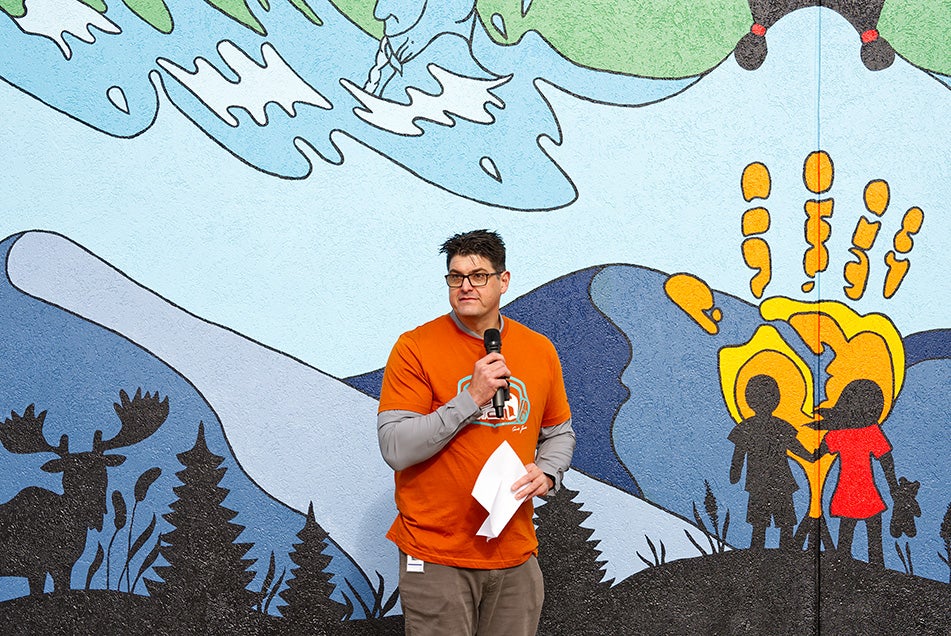
“While a mural alone cannot achieve reconciliation, projects like this can create space for Indigenous voices, experiences, and histories to be seen, shared, and respected,” said Steve Sorochan, Northwestel’s Director of Broadband Development, during the ceremony.
He also emphasized that reconciliation is ongoing work, requiring a commitment to listening, learning, and building stronger relationships.
Through its partnership with the Northern Rockies Arts Council, Northwestel contributed the building space, financial support, and assistance from team members to help bring the project to life.
The mural reflects the importance of those partnerships and the role that businesses, community organizations, and artists can play in creating opportunities for Indigenous stories to be shared.
And for Northwestel, it is a reminder that connection is about more than technology. It is also about listening to one another, creating opportunities for stories to be told, and strengthening the relationships that bring communities together.
See the story come to life in this video reel by Ryan Dickie of Winter Hawk Studios.
Meet the artists behind the brush
Amber Michel
Amber Michel is a First Nations Dene artist from Fort Nelson. Born in Fort St. John, with family connections to Fort Liard and Fort Nelson, Amber is now a grade 11 student at Chalo School. She has spent the past four years in Fort Nelson, where her experiences and surroundings continue to influence her creativity.
Her work ranges from landscape paintings to comic-book-inspired drawings and storytelling, often drawing from moments in her own life. Amber is particularly interested in creating artwork with symbolic and subtle meanings that invite viewers to look beyond what they first see.
Her creativity also extends beyond traditional art forms. This summer, Amber participated in the Welding & Wellness program, where she helped build an electric go-kart, and she is currently writing her own science-fiction novel. Whether through visual art, writing or hands-on projects, Amber continues to explore new ways to tell stories and bring her imagination to life.
Danielle Callbreath
Danielle Callbreath is a 20-year-old emerging artist from Fort Nelson, with roots in the Tahltan Nation and Buffalo River Dene Nation. Her creative practice spans painting and drawing, often incorporating elements of her culture, identity, and connection to the land.
Inspired by landscapes and abstract expression, Danielle uses art to explore and share the experiences that have shaped her. Her creativity extends to music as well, and she is passionate about singing.
As Danielle continues to grow as an artist, she is finding new ways to express herself and connect her experiences with her creative work. Her favourite quote, “We grow through what we go through,” speaks to that journey and the experiences that continue to influence her art.
Francine Freeman
Francine Freeman is a visual artist and educator who was born in Mississauga and now calls Fort Nelson home. Though relatively new to the community, she has developed a strong connection to the Northern Rockies and the people who call the region home.
Originally focused on hyper-realistic painting, Francine has more recently expanded her creative practice into large-scale commercial and residential murals. Her work reflects a passion for art, connection, and community, and an interest in using creativity to bring people and spaces together.
With nine years of teaching experience, Francine currently works full-time as an art teacher at Chalo School. She is also passionate about community outreach and has spent the past two years leading the Northern Rockies Artist Council, helping support and promote the local arts community.
Maggie Lamouche-Twin
Maggie Lamouche-Twin is a First Nations Cree artist from Sawridge First Nation. Originally from Slave Lake, Alberta, she now calls Fort Nelson home and is a grade 12 student at Chalo School.
Maggie creates paintings of people and landscapes, drawing inspiration from real-life experiences, photographs, and her imagination. Her work is deeply connected to her culture, community, history, and love of dancing.
Maggie’s first mural was created in the culture room at Chalo School, marking an important step in her journey as a public artist. Through her work, she explores opportunities for connection, expression, and shared experience, reflecting a quote by Valarie Kaur that resonates with her: “We can practice the world we want in the space between us.”
Stevie Nande
Stevie Nande is a First Nations Dene visual artist, actor, and filmmaker from Fort Liard, Northwest Territories. His creative practice spans several disciplines, including drawing, painting, acting, and filmmaking.
Stevie studied the arts while living in Vancouver before returning to the North to reconnect with his Dene roots. Bringing the skills and creative experience he developed while away back home, Stevie continues to explore different forms of artistic expression while strengthening his connection to the North and his community.
Photography by:
Ryan Dickie, Winter Hawk Studios
Tara Neufeld Photography
Francine Freeman
