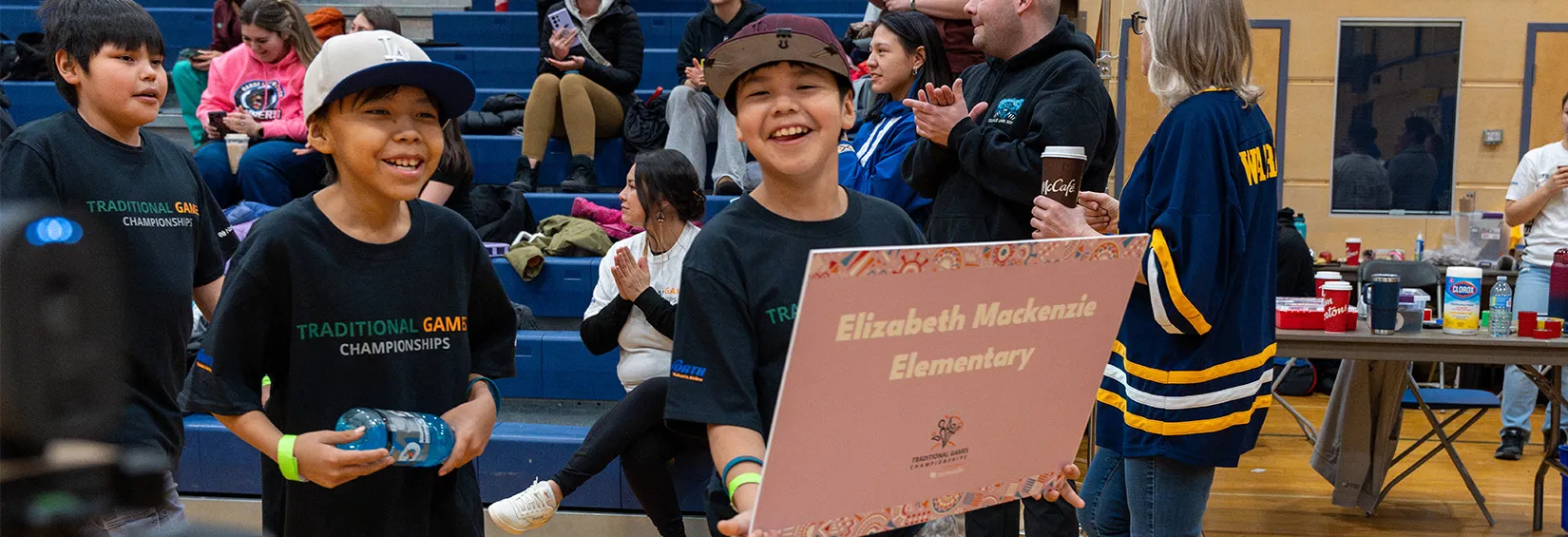
Carrying it forward: Youth and culture at the Traditional Games Championship
As part of Indigenous History Month, we are taking time to honour stories that reflect the strength, resilience, and rich cultural traditions of Indigenous communities across the North. One of these stories comes from the Indigenous Sport Circle NWT, the organization behind the Traditional Games Championship. To learn more, we spoke with Carson Roche, Events Manager with Indigenous Sport Circle NWT.
In the North, culture is not only shared through stories – it is lived through action. On gym floors, on snow and ice, and in the laughter of young people learning from one another, generations of knowledge continue to move forward.
The Traditional Games Championship is one of the spaces where this happens. Each year, youth from across the Northwest Territories gather not only to compete, but to experience culture in motion through activities that are deeply connected to life on the land.
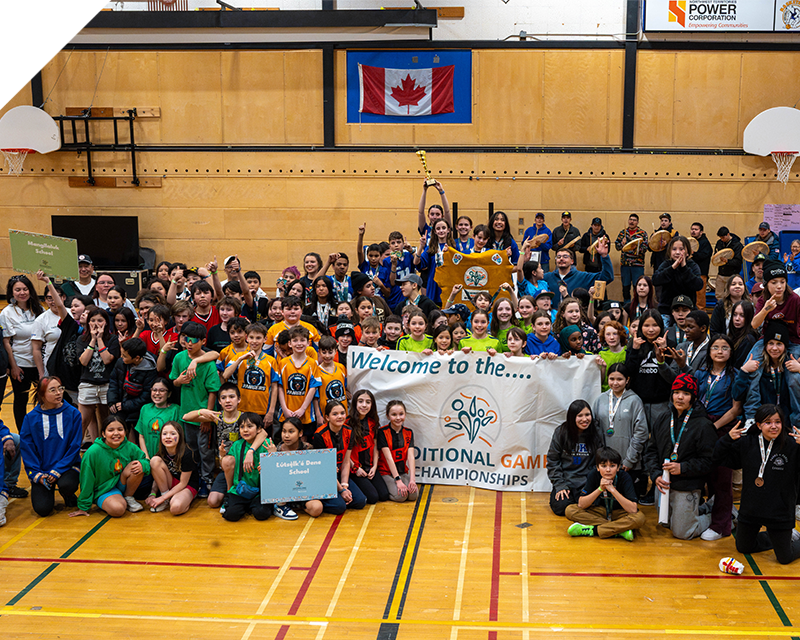
From March 27-29, 2026, more than 200 athletes aged 10 to 12 came together in Yellowknife for a weekend of traditional sport, teamwork, and cultural exchange. Representing more than 20 schools and communities, participants took part in Northern and Dene Games that challenge strength, skill, and focus, while carrying meaning far beyond competition.

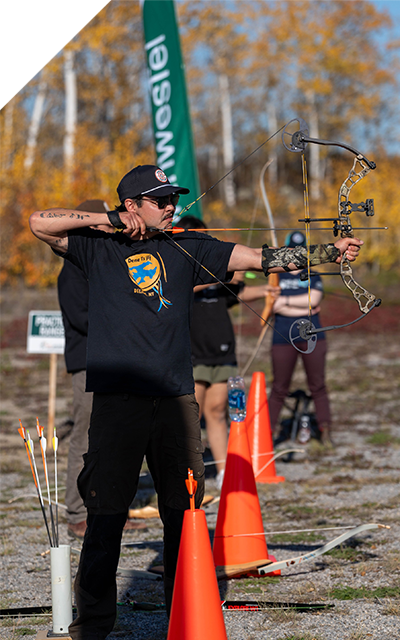
Carson Roche, Events Manager, Indigenous Sports Circle NWT
“It’s not just a sport – it’s a way of life,” says Roche, who grew up in Délı̨nę on the shores of Great Bear Lake. “All these games have stories relating back to skills to survive on the land. You learn strength, balance, accuracy – skills that helped our people thrive.”
Roche has spent nearly a decade traveling across the Northwest Territories, teaching traditional games and working with communities. Today, he leads the planning of the Championship, helping ensure each year builds on the last.
“The second it ends, you’re already planning the next one,” he says.
Strength, skill, and stories coming to life
The Championship features eight events, four Northern Games and four Dene Games, each rooted in cultural knowledge and lived experience.
Northern Games
Northern Games, often played indoors, focus on explosive strength, coordination, and control – skills once essential for moving across ice, hunting, and navigating harsh environments.
- Wrist Hang: Athletes suspend themselves by their wrists, holding their body weight for as long as possible. While it tests endurance, it also builds mental toughness – pushing participants to stay focused through discomfort.
- Triple Jump: With a series of powerful, continuous jumps, athletes must maintain balance and momentum. The movement reflects the need to travel quickly and efficiently across unstable terrain, such as shifting ice.
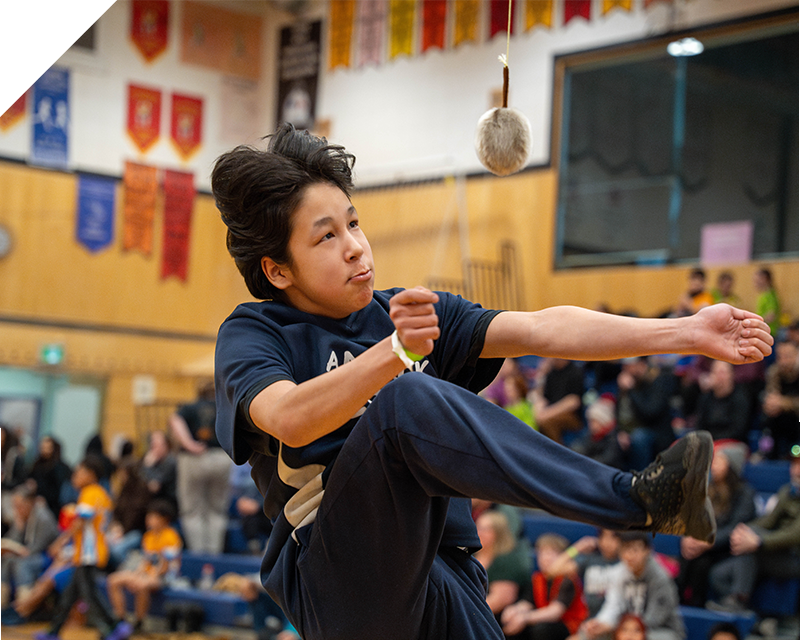
- One Foot High Kick: One of the most recognized traditional events, this kick challenges athletes to strike a raised target while balancing on a single foot, landing on the same foot afterward. Precision, timing, and control are key.
- Two-foot High Kick: Athletes leap straight up, striking a target with both feet before landing safely. Traditionally, this motion was used to signal success – such as a successful hunt – across long distances.
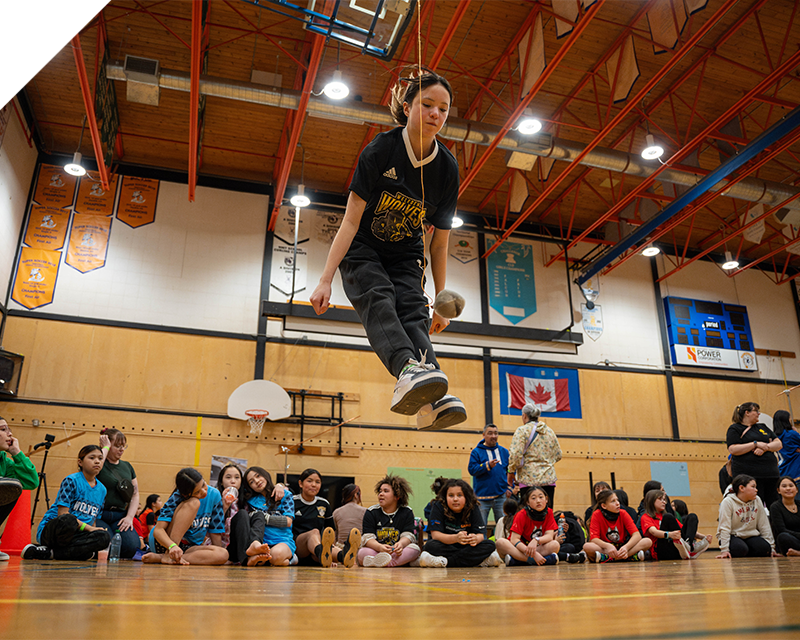
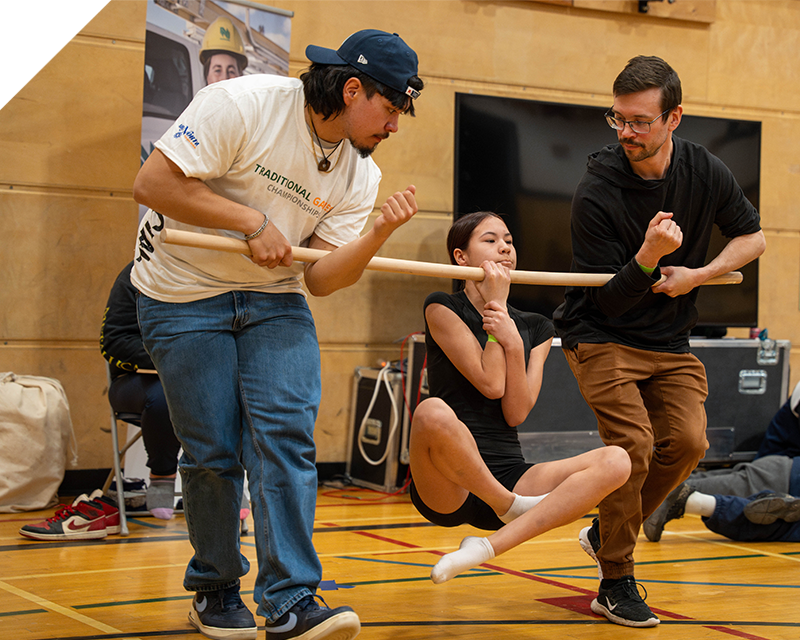
Beyond the physical demands, Northern Games emphasize quiet control.
“When you land, you’re trying to be as quiet as possible,” Roche says. “That connects back to hunting – you had to move silently on the land.”
Dene Games
Dene Games blends physical strength with strategy, teamwork, and cultural practice, often taking place both indoors and outdoors. Many are directly tied to hunting, harvesting, and everyday survival.
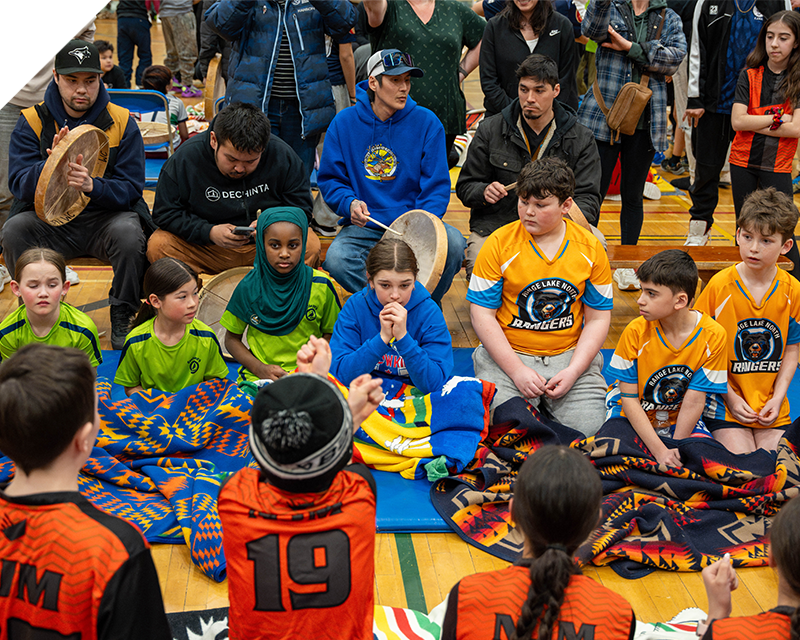
- Hand Games: A vibrant and energetic team game, Hand Games combine rhythm, drumming, and quick thinking. Players must guess where an object is hidden while reading their opponents’ movements. Often played as a featured event, it brings communities together through music, cheering, and shared excitement.
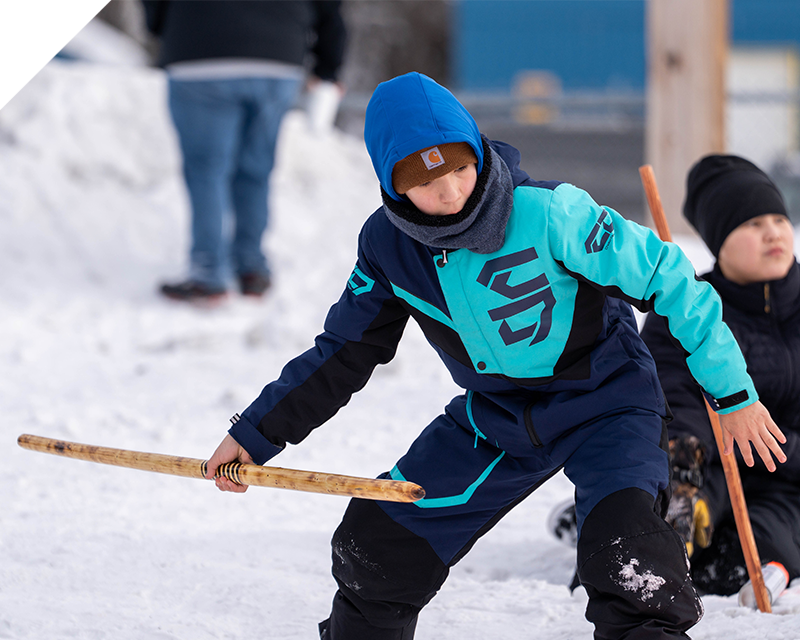
- Snow Snake: Athletes throw a long, carved stick across snow or ice, aiming for distance and precision. Historically, this skill was connected to hunting, where similar tools could be used from a distance.
- Pole Push: Two opponents sit facing each other, pushing against a shared pole in a test of balance, strength, and leverage. Strategy plays a major role, as technique can overcome size.
- Stick Pull: In this fast-paced contest, two athletes grip opposite ends of a greased stick and try to pull it free. The slippery surface mimics handling fish, helping develop a strong grip and quick reactions.
“That’s why it’s covered in lard,” Roche explains. “It’s like holding onto a fish; you’re training your hands for real-life skills.”
More than competition
What makes these activities unique is not just the skills they build, but the knowledge they carry. Each sporting event is a teaching tool – connecting young athletes to history in a hands-on, meaningful way.
“There are hundreds of traditional games,” Roche says. “Every community has variations, their own styles. It’s all about sharing that knowledge.”
For participants, the experience goes far beyond the competition floor. Many youths are traveling for the first time, meeting peers from other communities, and discovering new traditions.
“They’re just having fun,” Roche says. “From the moment they arrive, they’re laughing, competing, and making friends.”
In one standout moment this year, two teams – one made up entirely of girls and another entirely of boys – joined forces for a Hand Games event, placing third overall.
“It showed what the Games are really about,” Roche says. “Coming together.”
A pathway to something bigger
While the Championship is rooted in culture, it also opens doors to future opportunities.
“This is a steppingstone,” says Roche. “If [the youth] have a great time here, they might keep practicing. They could go on to the Arctic Winter Games, North American Indigenous Games – even the World Eskimo Indian Olympics in Alaska.”
With traditional sports gaining recognition at major events, youth are beginning to see how these skills can take them beyond their communities while staying connected to culture.
As the Championship continues to grow, organizers are focused on reaching more communities and inspiring more youth to take part.
“There are still communities that haven’t experienced it yet,” says Roche. “We want to get out there, teach the games, and bring them in.”
For participants the impact is immediate – but it also lasts far beyond the weekend. Many return home inspired, practicing games with friends and sharing what they’ve learned.
“We’ve seen kids playing Hand Games on the plane ride home,” Roche adds. “That’s when you know it’s working.”
A living tradition
The Traditional Games Championship is a powerful reminder that Indigenous culture is not something of the past – it is something actively lived and shared.
Through every jump, throw, and moment of teamwork, youth are carrying forward knowledge, skills, and stories that have shaped life in the North for generations.
And with each passing year, those traditions continue to grow – stronger, louder, and more connected than ever.
Photography by NWT Indigenous Sports Circle
